

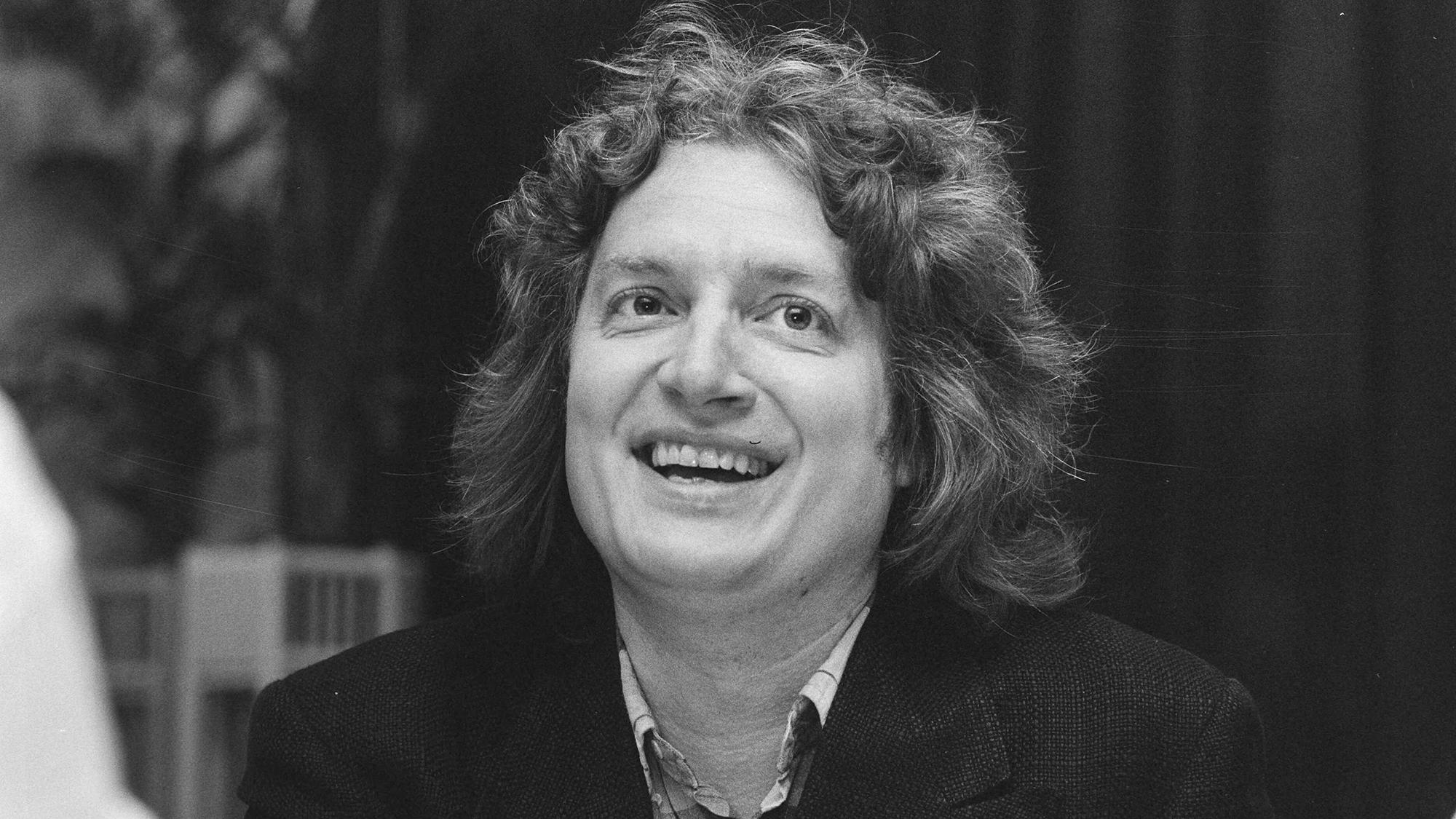
GM Jan Timman, a former world number-two, multiple world championship candidate, nine-time Dutch national champion, prolific author, honorary editor of New in Chess magazine, and endgame studies specialist, passed away on Wednesday after battling a serious illness. He was 74.
How does one decide to become a chess player? And when does one consider oneself to be a chess player? When speaking to his biographer John Kuipers, Timman saw the following incident as the moment when his professional career unfolded:
In the early seventies, chess was considered more interesting than it is now. It felt like it had a certain importance. In a sense, I was outside of society as a chess player, which was an interesting fact.
Back in those days, I once met Donner in the corridors of the IBM tournament. Except for him and me, there wasn’t anyone there at the time. He was walking there with a cigarette, stopped, took one last drag, and then stomped out his cigarette on the carpet. He looked at me meaningfully. I thought that was very good; it really appealed to me. I stood still, looked at Donner, and thought: yes, it’s good to be a professional chess player; you just do things like that. Other people don’t do that.

Jan Timman in 1979. Photo: Rob Croes/Dutch National Archives.
Timman was by far the best Dutch chess player of his generation, winning nine national titles in total. He was one of the best players in the world for two decades, roughly between 1975 and 1995. He was the world number-two behind GM Anatoly Karpov in 1982, and for a long time known as the Best of the West. He was a worthy successor to his compatriot, the former World Champion Max Euwe. Like Euwe, he created a real chess fever in the Netherlands each time he was doing well in tournaments and matches, but his fans also had to endure his failures, e.g. at Rio de Janeiro 1979 or his 1986 Candidates match vs. GM Artur Jussupow.
After losing a Candidates final match to GM Nigel Short in 1993, Timman ended up playing for the FIDE world title after all because Short, with GM Garry Kasparov, broke away from the International Chess Federation to launch the Professional Chess Association. Timman faced Karpov for the FIDE title in the Netherlands and Indonesia in 1993. Karpov won.
Akin to “total football” in the early seventies, Timman was a “total chess player.” He was a great strategist, and had a style that involved both attacking and positional elements, multidimensional and broad in scope. His greatest influence was GM Mikhail Botvinnik, the topic of his very first chess book, although GMs Vasily Smyslov and Bobby Fischer influenced him strongly as well, alongside the strongest opponents that he faced, Karpov and Kasparov.
“With Botvinnik it was different,” he said about this. “It was all so crystal-clear and then the way he played. The way Botvinnik explains things is very special. Look, Fischer as a person was overwhelming, but his way of playing is inimitable. In that respect, Botvinnik actually gives you something to hold on to. Fischer was inspiring; you could play chess that way too. But Botvinnik, and to a certain extent Smyslov as well, were truly important for my chess development.”
Look, Fischer as a person was overwhelming, but his way of playing is inimitable. In that respect, Botvinnik actually gives you something to hold on to.—Jan Timman
Another remarkable aspect of Timman’s play was his incredibly wide repertoire. Nowadays, all the top grandmasters play multiple openings with both colors because otherwise they would be too predictable in an era when computers would make preparation all too easy for their opponents. In the 1970s and 1980s, many grandmasters had much narrower repertoires, but not Timman. He played almost all the openings, and understood them well. This was the result of hard work.
“In general, I came well prepared,” he said about this. “I spent hours trying to understand positions, opening positions, and I didn’t always succeed in doing that but very often I did succeed. I found some really nice ideas in openings and that was basically also because I was just interested and curious about it.”
Regarding his strengths, he said: “I think that it’s possible that in general, I’ve been better at attacking than at defending. That is basically what it’s about, because if you underestimate the enemy’s threat, then normally you’re on the defensive. But, of course also, what I was very good at in general, was taking the initiative. And then I could judge the position quite well.”
“Of course, I could simply overlook easy, simple things,” he said about his weaknesses. “I think that most players have that, but actually, in my career, it happened more often. I think that is more a part of it than underestimating the possibilities of the opponent, just making bad errors. And there’s a tradition in Holland, because Donner and Euwe had the same habit, especially Euwe.”
Timman in 1978. Photo: Rob Bogaerts/Dutch National Archives.
Timman was a bon-vivant who enjoyed life as much as possible. Besides his passion for playing chess and for traveling (the perfect combination!), his third was writing. He wrote for newspapers and magazines and wrote more than a dozen books, and not only about chess.
Timman has been described as the last of the romantics. In his acclaimed book Timman’s Titans from 2017, he wrote: “Above all, professional chess is now ruled by a computer. I think that in these times, I wouldn’t have become a professional chess player. Knowledge has become too important. You cannot live on talent alone.”
I think that in these times, I wouldn’t have become a professional chess player. —Jan Timman
Timman’s approach to chess, and that of his peers, was different: “I was basically concentrating on the game, I knew that was the best approach and I was not nervous in any sort of way, I thought it would always be okay somehow. I mean, it’s just the way of life, yeah, it’s not like chess players nowadays, when they are 20 years old, I mean their life looks very tidy, very organized. It was not like that at all in those days. It was not very well organized at all and we just liked to live and I liked chess, it was a way to travel but I loved the game already at that time and I never lost that love.”
Preparation for games was also completely different. In a New in Chess podcast from 2024, Timman said about this: “I just studied the games of great players. I remember when I was playing my first Dutch Championship in 1969, I had the habit of playing over games of Botvinnik against Smyslov. I was just sitting there, not even my hotel room, but somewhere in the hotel. And I remember that at some moment Donner was there and he just came to me. And he said, ‘Can I sit next to you? I also want to see this.’ And he said, ‘Yeah, great games.’ I was 17. I didn’t know him that well, but that was very touching.”
Timman playing Donner at Wijk aan Zee 1971. Photo: Dutch National Archives (photographer unknown).
For the bigger part of his career, he hardly used computers. This author still vividly remembers that during my first job after university, in 1999 at the New in Chess office in Alkmaar, the Netherlands, every few weeks or so a fax would come in with several pages of hand-written text: Timman had delivered his latest column.
Timman never played online (he truly hated it) and would only use the computer sometimes for chess preparation in the last decade of his life, and never with a lot of pleasure. That was different with regards to creating studies, his big chess passion later in life, although he only started using the computer for that around 2008.
“I think that if I use the computer for my endgame studies, it’s a blessing,” he said about this. “And I think that that is a part of a romantic chess still. I mean, to compose studies with the aid of a computer makes the whole process a lot easier to do.”
His love for endgame studies came early in his career and not just to solve them, but to create them too. He was one of the strongest over-the-board players to have created studies, alongside e.g. Richard Reti, Smyslov and Pal Benko. In 2011, Timman published The Art of the Endgame – My Journeys in the Magical World of Endgame Studies. Afterward, he described the period when he was working on it as one of the happiest of his life.
In the preface to the book 100 Endgame Studies You Must Know from 2024, he explained: “My fascination for endgame studies, even in my younger years, was mainly caused by the fact that they forced you to think backwards. It had always been so self-evident to think forwards , to ruminate about how a position would develop. This was a new experience that gave me an intellectual stimulus.”
Timman had a big interest in literature. He wrote essays on Jorge Luis Borges, on Fyodor Dostoevsky, on Ryunosuke Akutagawa, and on some Dutch writers. He loved Bob Dylan, the Rolling Stones, Frank Zappa, Muddy Waters, Howlin’ Wolf. He would visit museums during tournaments; his favorites were Paul Gauguin and Marc Chagall. He was a man interested in many aspects of the world, things far away from the narrow chess world where his main occupation took place.
Timman in 1972. Photo: Bert Verhoeff/Dutch National Archives.
Jan Hendrik Timman is born December 14, 1951, in Amsterdam, the Netherlands. His parents Anna and Reinier are both university-schooled mathematicians and already have two children, Ton and Yolande, and Jan’s younger brother Reinier will be born three and a half years later.
Timman grows up in Delft, one of the oldest cities in the Netherlands situated between The Hague and Rotterdam, where his father is working as a professor in applied mathematics and theoretical mechanics at the Technical University. In those days, it is special that his mother is also a mathematician, but she doesn’t practice it and mostly takes care of the children.
Jan is a bright pupil during primary school and skips the third year. At the age of 11 he joins the gymnasium because his father wants him to be a mathematician too. By then, Jan has been playing chess for a few years already, but at that point, it wasn’t clear yet that this would altogether change the plans his father had for him.
When he is eight years old, Jan learns chess after seeing his older brother Ton playing games with his father and even writing down the moves, something that fascinates him. Initially, Jan himself is more interested in draughts and Monopoly.
In his Timman biography from 2011, Dutch journalist John Kuipers writes that Ton makes a deal with his younger brother that would have far-reaching consequences for the chess world: he trades five games of Monopoly for one game of chess. Ton pushing his younger brother to play chess has some irony. Later in life it wasn’t always easy for Ton, who reached close to master level himself, to see Jan overshadow him tremendously on the chessboard. But Ton, who died in 2014, would always remain supportive of Jan, as his first teacher, and the first to see his talent.
Jan joins the local chess club the same year and wins the youth competition of 1960-1961 with a 17.5/18 score. The Botvinnik-Tal world championship is the first top-level chess event that he closely follows in the newspapers. His first chess book is Botvinnik plays like this! by Hans Müller. Something that is very helpful from the start is Jan’s insatiable curiosity and eagerness to understand everything that interests him.
Aged 13, he holds the future world champion Boris Spassky to a draw in a simul and then at 14, he wins the Dutch U20 championship as the youngest ever player to do so. At 15, he wins his first money prize: 75 guilders at the The Hague Chess Days. “You have to do something special with that money, adult members of the Delft Chess Club told me. I didn’t. I saw the money as a first instalment of what was coming: a regular income, to be earned by sitting behind the chessboard and making moves,” Timman would later write.
A 12-year-old Timman (right) playing M. Simon at a national youth tournament in Rotterdam in 1964. Photo: Jean Smulders/Dutch National Archives.
This year he starts working with a trainer, International Master and well-known author in the Netherlands Hans Bouwmeester, (who happens to be still alive, now 96 years old) and Jan makes steady progress. He comes third at the 1967 World Youth Championship in Jerusalem, held shortly after the Six-Day War.
Meanwhile, Jan’s father has his doubts about his son’s chess future. This is because he once played himself against Paul Keres in simultaneous exhibition and after the game, Keres had told him that the life of a chess player was quite difficult.
Jan, however, is already making money from chess here and there. For instance, he wins 500 Swiss francs for his second place on tiebreak with Edwin Bhend in Biel in 1968, and then wins the tournament outright in 1969, earning 800 Swiss francs. This was very good money at the time. And also, Jan just doesn’t like the whole lifestyle that comes with studying. To be more precise: he doesn’t like having to wake up early.
A new high point is the traditional Hastings tournament of 1969/70, where he manages to draw black games against two chess giants: Smyslov and Lajos Portisch. Timman: “This gave me hope for the future, but first I had to take my final exams at grammar school.”
In 1970, Timman graduates. He plans to move to a student flat in Amsterdam and enroll in mathematics (like his father wanted, and he was good at it too). About what happens next, he said: “But there was a very long line of people at the time. When it was finally my turn to enroll, it turned out I hadn’t brought my birth certificate. So, I actually had to come back. But then I said, can I get a provisional certificate of enrollment? Then I can apply for a deferment of military service and get the student room. But I never went back.”
Jan is now living in a student home in the north of Amsterdam, and his father sends him a healthy sum of 450 guilders each month. “I thought at some point, well actually it’s ridiculous,” Timman said about this. “I get 450 guilders from my father and I don’t study. So I went to Delft, I went to my parents’ home and I asked him: please don’t send me any more money. And then he understood.”
Timman later described this episode as the realization that he didn’t want to be dependent on society: “I could never have had an office job.”
I could never have had an office job.—Jan Timman
Thanks to a special sports fund and some lobbying by Max Euwe, Jan spends one and a half month in Moscow and Tbilisi where he is trained by Eduard Gufeld. In 1971, he obtains the International Master title by winning the Hoogovens Masters group. That means he is quickly becoming one of the strongest players in the Dutch chess scene: a somewhat sloppy-clothed, dreamy type with angelic hair, but one with a clear talent for the game.
Timman during the Dutch blitz championship of 1971, with Max Euwe on the left looking. Photo: Dutch National Archives (photographer unknown).
After Timman’s first Dutch championship, where he finishes in a tie for fourth place behind Hans Ree, Donner and Eddie Scholl, Donner writes: “Only Timman’s play had its moments of noblesse. The incredible way, for instance, in which he refused to win against Krabbé showed signs of true greatness.”
Meanwhile, his older brother Ton is developing himself into a decent player as well and would eventually gain the FIDE Master title. The two brothers both qualify for the Dutch championship of 1972. Jan is already an International Master, Ton is considered a dangerous outsider.
After the penultimate round, IM Coen Zuidema leads the competition with 7.5 points with Jan on 7 points. Ton will play black vs. Zuidema in the last round and Jan joins his hotel room the night before with his good friend Hans Bohm and some beers, to teach Ton how to play the 4…Qd7 line in the Winawer French.
The next day, Jan beats Hans in their mutual game and Ton reaches a winning position: he can make his younger brother champion of the Netherlands… but ends up losing the game. The opening preparation had worked to his advantage, but the beers that came along with it had not.
In those early 1970s, Jan used to travel to tournaments in a Volkswagen van together with his friends Bohm and Huib Knuvers. In Timman’s Triumphs, he wrote the following anecdote about that time, typical for his bohemian lifestyle:
About half a century ago, Hans Bohm and I picked up the habit of looking for announcements of open tournaments in chess magazines. In this way, we discovered that an interesting tournament would be taking place in Stockholm around the turn of the year – the Rilton Cup. First prize was 6,000 Swedish kronen. A huge sum – the same amount as first prize in Wijk aan Zee. Right after Christmas, Bohm and I left for the high North, together with our friend Huib Knuvers, in a Volkswagen van. We had the habit of sleeping in the van during travel, but we were talked out of this when we arrived in Stockholm: it was much too cold there. There was nothing for it – we had to take a hotel. We moved into a room in the Sjofarts Hotel, not far from Gamla Stan, the old town. In those days, you weren’t required to show your credit card when you checked in – of course, we didn’t have one. But we didn’t have any money either! What it came down to was that we had to win a good money prize, otherwise we would be having to do some dishwashing in the hotel catacombs. And I did manage to carry off first prize. Now I had money for months to come!
Timman and Bohm would remain friends for most of their lives, but there is a brief period of slight animosity. A low point in their friendship comes with their mutual game at the 1984 OHRA tournament. Timman is in the shared lead and plays Bohm, who is an IM and only needs a draw to score his second and final GM norm.
When Portisch and Campora draw their last-round game quickly, Timman only needs a draw for a shared tournament victory, which Bohm informs him of. However, at that point, Bohm has just made a mistake on the board and Timman sees it as his professional duty to play on and try to win the tournament outright. Timman indeed wins the game against his old friend, and Böhm would never become a grandmaster. (He did become a successful radio and TV personality.)
The fateful game between Bohm and Timman at OHRA 1984. Photo: Rob Bogaerts/Dutch National Archives.
In the early seventies, Timman didn’t have many expectations yet. Other players from his generation develop more quickly, such as Henrique Mecking, Ulf Andersson, Ljubomir Ljubojevic, Zoltan Ribli and, of course, Karpov. But at some point, when he starts getting better and better results, his attitude changes. In a podcast in 2025 he told an anecdote about this:
In 1973, in Hastings, I scored my second grandmaster result. But at that time, I didn’t really know what I wanted to do next. But Ischa Meijer (a famous Dutch interviewer – PD) came by to interview me. And Ischa Meijer had a bottle of vodka with him. And that day, I had just lost a game. So, at some point, I had drunk too much vodka. And Misha Tal was also nearby. It was all quite interesting. And then at some point, yes, I actually don’t remember exactly how it all went, that whole conversation. But then, at some point, I read that I had said, yeah, ‘I’ll become world champion, just wait and see.’ But I was really surprised that I had said that. Yes. I wasn’t at all… that wasn’t really a conscious thought. But I was drunk, and that’s when I said that to him.
As the podcast interviewer suggested, Timman likely saw it as a message to himself, subconsciously.
A sign of great things to come is the tournament in Sochi, Russia, in 1973, where Timman finishes in fifth place behind Mikhail Tal, Spassky, Nikolai Krogius and Jan Smejkal. Behind four big names. In the same year, he then scores his first GM norm by winning the Guardian Tournament in London ahead of Raymond Keene and Samuel Reshevsky. His second norm comes a few months later, in the 1973/74 edition of Hastings, where he finishes in a tie that includes Tal.
Left to right: Keres, Smyslov, Euwe and Timman, at the 1971 IBM tournament. Photo: Bert Verhoeff/Dutch National Archives.
Timman officially obtains the grandmaster title during the Nice Olympiad in 1974, aged 23. He is then the second-youngest with the title; Mecking is one month younger. Donner supports him in playing first board at the Olympiad, because Jan is the reigning Dutch champion. This symbolic move was both a class act from Donner and in hindsight, the moment when Timman realizes he is above everyone else in his country. He would play top board in 11 Olympiads for Holland.
There’s a well-known article written by Donner titled “I urge Jan Hendrik Timman to observe strict discipline,” where he notices a “lack of solidity” in Timman’s play in Nice and that Jan is “markedly sloppy.” Adding, “and I am speaking from experience in pointing out that accuracy is more important in chess than profundity,” Donner then told this anecdote:
True, Timman’s profundity is bottomless. It is beyond me, in fact. Together with Unzicker, I followed his game against Kortchnoi. We saw him play a bishop from f1 to e2 around the tenth move. I would have played Bd3 , said Unzicker. No, I understand, I said. But after Kortchnoi made a normal developing move, something like Ra8-c8, Timman moved the bishop from e2 to d 3 . Unzicker and I looked at one another, nonplussed, and started laughing. But that wasn’t the end of it. The game continued with an early exchange of queens, after which Timman castled and moved his king via fl to e2. ‘I’ve been young myself,’ said Unzicker, ‘but this is too much.’ We shook our heads.
Donner and Timman in 1981. Photo: Rob Bogaerts/Dutch National Archives.
Considering Timman’s respect for and good friendship with Donner, we can only assume that he took the advice to heart. When Donner died on November 27, 1988, Timman wrote: “He was someone who meant a lot to me. I learned more from him about life than about chess.”
He was someone who meant a lot to me. I learned more from him about life than about chess.—Jan Timman on J.H. Donner
Early in his career, Timman already admired Donner for his writings. Any Dutch chess player who writes, hopes to emulate at least something from Donner and Timman was no different. Besides chess and traveling, writing became his third, lifelong passion.
This started with early publications of analysis in Schaakbulletin (e.g. from the Fischer-Spassky match), later on he started to publish chess-technical books (The Art of Chess Analysis is a classic) but also books full of chess stories (and few diagrams). He would even write some books about other topics other than chess. In the last two decades, he returned to writing true chess books. Timman was “honorary editor” of New in Chess magazine and has contributed to it from its inception in 1984 till the present day with numerous contributions.
Timman playing Donner at the 1974 Wijk aan Zee tournament. Photo: Dutch National Archives (photographer unknown).
After Nice 1974, Timman starts to travel even more to play tournaments, from New York to Venice, several tournaments in the former Yugoslavia, Germany, Switzerland, France, England, Austria, Sweden. A lovely life on the road–a life that he loved.
In his 1988 book Het smalle pad (The narrow way), he wrote:
In the life of a 20-year-old professional chess player, ambitions go hand in hand with dreams that are nourished by restless travelling from one tournament to another, from one country to another. In such a life, there are no school desks or college halls, there’s no pressure to get up early, no duty to give account for anything. A triumphant feeling takes possession of you. You are your own boss, governed only by your own abilities.
In 1975, Timman wins his second Dutch championship with the tremendous score of eight wins, three draws and no losses. At the end of the tournament, the military police appears at the venue with a note that he missed the deadline to present himself for military service. They take him into custody and it’s all over the Dutch news, with headlines such as “Army checkmates chess champion.” Timman writes a petition to the minister filing for temporary exemption, which is granted, but still spends two weeks in jail. Donner says: “Alone in a cell, that’s every chess player’s dream.”
Also in 1975, Jan plays in the zonal tournament in Reykjavik when the message reaches him that his father has died unexpectedly, aged 58. A difficult period follows, in which Jan openly alludes to giving up chess altogether and perhaps switch to studying math after all, honoring his father. Around that period there were plans for a match between Euwe and Timman, which was canceled due to the circumstances. Euwe even sent a letter in which he wrote that he understood Jan’s consideration to quit chess.
Timman did face Euwe at the 1971 national blitz championship. Photo: Dutch National Archives (photographer unknown).
His father didn’t live to see the peak of his career, but did witness his first successes. Ten years after his father’s death, Jan receives a letter from a colleague of his father’s. His father had told his colleague: ‘My son will be much more famous than I will ever be.’” Timman’s passion for chess returned after Lubosh Kavalek invited him to join him to the Interzonal tournament in Manila as a second.
In 1976, Timman comes third in Skopje behind Karpov and Uhlmann and also wins the gold medal on board one for the Netherlands. The team wins silver in Hafia, Israel, an Olympiad boycotted by the eastern bloc countries. He then returns to Reykjavik and this time wins the tournament with Fridrik Olafsson.
Jan Timman in 1978. Photo: Koen Suyk/Duch National Archives.
Timman’s weaknesses in life were the ones that fitted with the bon-vivant lifestyle: sloppiness and laziness. In hindsight, you could say that everything he accomplished on the chessboard until 1978 was mostly based on his immense talent. He said about this: “I have always been lazy. That’s why I wasn’t extraordinarily strong. I had talent, but I didn’t work hard. Even when I already was a grandmaster. Only after my marriage in 1978 I started working really hard.”
Timman marries Ilse-Marie Dorff, who helps him organize his life. 1978 is a true turning point in his career, as he starts to score exceptional results. In Bugojno he comes third, behind world champions Karpov and Spassky but ahead of players like Tal, Bent Larsen, Portisch, Ljubojevic, Robert Huebner and Svetozar Gligoric. Also, he is the only one to beat the reigning world champion, his first victory over Karpov. Afterward, he is annoyed to realize he could have won even more beautifully. The attitude of a top player.
In the same year he wins a strong tournament in Niksic, a tie with Boris Gulko but ahead of Portisch, Hort, and others. Looking back, he was always satisfied with the quality of his play there, and felt this was his first great tournament.
Timman then also wins the IBM tournament in Amsterdam that year, and then ties for first in the zonal tournament in Amsterdam together with Tony Miles, his first big success in a world championship cycle event. The January 1979 FIDE rating list shows a tremendous fifth place in the world rankings for Timman with a rating of 2625.
Timman giving a simul in January 1979 in Wijk aan Zee. Photo: Fernando Pereira/ Dutch National Archives.
The chess fever breaks loose in the Netherlands: Timman will be in the Interzonal, and maybe he’ll qualify for the Candidates matches! Euwe is one of the people behind the launch of a special “Jan Timman fund” to financially support the talented Dutch player in the coming years.
Timman travels to Rio de Janeiro in 1979 for the Interzonal tournament and brings Andersson as his second. Over 17 rounds, he loses only one game, but plays too many draws. The top three will qualify for the Candidates matches (Portisch, Tigran Petrosian and Huebner); Timman comes fourth. He misses out on qualifying for the Candidates matches by half a point.
A famous episode from this tournament is Timman’s game with the Serbian grandmaster Dragoljub Velimirovic. In the Netherlands, chess fans gather at their clubs and in cafes to analyze one particular chess position with only six pieces left on the board. As the Dutch fans are rooting for Timman in his quest to become the country’s second champion in history, they follow his game from round eight closely as it unfolded over several days. Back then, long chess games would at some point be adjourned and continued on a different day, and during an exceptionally long game, this could happen multiple times.
Timman has a rook and a pawn, Velimirovic a bishop and a pawn, with the pawns blocking each other and Velimirovic’s bishop protecting his pawn. It’s a tough barrier to break, all the more because in many positions, it takes more than fifty moves to do so, the allotted time prescribed by the regulations from the moment a capture or a pawn move has occurred. If Timman cannot make enough progress in time, his opponent will get away with a draw, even though the position is theoretically lost for him.
As it happened, Timman has brought some endgame books to Brazil: those of the French-Swiss theoretician Andre Cheron. Timman finds his endgame in one of the books and starts studying it together with his Andersson. “Ulf had a very good brain for such endgames,” Timman told this author during a conversation in the spring of 2023. “It’s rather mathematical. The fewer pieces are left on the board, the more abstract the reasoning gets.”
Meanwhile, in the Netherlands, Dutch fans are enchanted by Donner’s almost daily coverage in the newspaper De Volkskrant. The grandmaster tries to explain Cheron’s algebra to his readers, and after his first article, he receives twenty phone calls from amateur players who claim to have found a winning strategy for Timman.
Even before looking at Cheron’s work, Andersson discovers a quicker way to win the endgame than is in the book. And while Velimirovic defends quite well, Timman eventually wins the game, but fails to qualify eventually. Donner wrote: “That he failed to make the grade didn’t matter in the end. By then, Holland had lived through a week of chess fever such as we hadn’t seen for decades.”
1980 is not a bad year but not particularly successful either. Tournament victories return in 1981: his first win in Wijk aan Zee (joint with Genna Sosonko), his sixth national title, and victory at the last IBM tournament in Amsterdam, ahead of Karpov. He then crushes the field in Las Palmas, finishing two points ahead of Bent Larsen. after finishing third in the Interpolis tournament at the end of the year, his new rating in January 1982 is 2655. Six weeks after Euwe had died, Timman is the second player in the world, behind Karpov.
Timman and his wife (and behind, on the left, Donner) at Euwe’s funeral. Photo: Rob Bogaerts/Dutch National Archives.
In 1982, he scores one of his best tournament victories in Argentina: the fourth Clarin tournament in Mar del Plata. He has a series of eight wins in a row, including black games against Karpov and Portisch. Looking back many years later, he felt that his win against Karpov there might have been the best game he ever played.
There was a funny side story connected to this game. Timman: “The game was adjourned at some point. Karpov was clearly lost and just had to resign, of course. But he still struggled with it, because he usually won the tournaments anyway. And in that tournament, I was going to win. And then at some point, his wife came to me and said, ‘May I congratulate you.’ So he actually had his wife congratulate me.”
However, the more important Interzonal in Las Palmas turns out to be a disaster, and Timman is never near the two qualification spots for the Candidates. A bitter disappointment.
Three years later, it finally happens. In the summer of 1985, the same year he scored sole victory in Wijk aan Zee, Timman won the 1985 Interzonal in Taxco, Mexico. And how! He wins nine games, draws six and loses none! Second is Jesus Nogueiras with 1.5 points less, then follows Tal in third place. He had dropped to 15th in the world, but after this event, Timman was back as world number three (2640) behind Karpov (2720) and Kasparov (2700). It was clear: he is the Best of the West, a moniker that would stay with him for a long time.
The world championship cycle is different back then, with Florencio Campomanes as the FIDE President who brings back the “revenge match” for the world champion who lost his title– well, sort of. The next step for Timman is the Candidates Tournament in Montpellier in October, from which four players will qualify for the semifinals of the Candidates matches, and the winner of the final would play the loser of the 1985 Kasparov-Karpov match.
For first time, Timman does qualify for the Candidates matches. He ties for fourth place with Tal (behind Jussupow, Andrey Sokolov and Rafael Vaganian) and then qualifies after a playoff match vs. Tal.
In December 1985, Kasparov’s first event after winning the world title is a match with Timman in the Netherlands. He wins 4-2, but in game three the Dutchman scores a brilliant win, Kasparov’s first loss as the 13th world champion.
Timman and Kasparov in 1985. Photo: Bart Molendijk/Dutch National Archives.
Already in January 1986, Timman’s first Candidates match is scheduled and in hindsight, it comes too early. Exhaustion is likely the reason for Timman’s heavy 6-3 loss to Jussupow. Timman’s world title aspirations are back to square one, but the next year he wins the Euwe Memorial together with Karpov and he also wins the Interpolis tournament in Tilburg for the first time.
Jan Timman playing Artur Jussupow in 1986. Photo: Rob Bogaerts/Dutch National Archives.
Timman is one of the main characters behind the Grandmasters Association (GMA), an organization that attempts to professionalize the chess world for the elite players, founded during the Dubai Olympiad in 1986. The most important man behind the organization is the Dutch businessman Bessel Kok, President-Director of SWIFT at the time. For a few years, the GMA organizes a number of top tournaments with excellent prize money. Kok is chairman of the GMA’s committee, Garry Kasparov president, and Timman and Karpov vice-presidents.
In 1988-89, the GMA organizes six World Cup tournaments, in Brussels (Belgium), Belfort (France), Reykjavik (Iceland), Barcelona (Spain), Rotterdam (Netherlands) and Skelleftea (Sweden). Timman himself doesn’t do particularly well in this Grand Prix-type series except for Rotterdam, which is one of the best tournaments of his career. He wins with 10.5/15, ahead of Karpov. Around the same period, he has another big success, winning the 1988 Linares tournament.
In that period, Timman also qualifies for the Candidates matches again in the next cycle, and this time he is more successful than ever. Timman beats Valery Salov, Portisch and Jon Speelman in matches, and his archrival Karpov awaits him next. The winner of that match will be fighting Kasparov, who had now held on to his title in matches with Karpov three times in a row. Maybe it was time for a new opponent.
Timman in 1988. Photo: Rob Croes/Dutch National Archives.
The match with Karpov takes place in 1989 in Kuala Lumpur, Malaysia. Timman loses without having a real chance and in hindsight, the first game felt decisive. On move 18, he had come up with a novelty that was plain bad, and that early loss had a big effect on him.
But yet again, Timman gets just as far in the next cycle, or arguably even further. He defeats Huebner, Viktor Korchnoi and Jussupow in Candidates matches, the latter as a revenge for his lost match in 1986. This time, it isn’t Karpov who is awaiting him as the final hurdle to reach the battle with Kasparov. No, Karpov surprisingly loses to the Englishman Short, and so the Candidates final match in early 1993 is played in San Lorenzo, Spain, between Timman and Short.
Timman loses the match narrowly. He has never been this close to a match with Kasparov, during a period when he was optimistic that he could have beaten the Beast from Baku. This is partly because of Timman’s glorious success at the 1991 Immopar rapid tournament, where he had beaten Kasparov in the final after eliminating the likes of Gata Kamsky, Karpov, and Vishy Anand. Over the course of a few days, he wins the equivalent of $80,000, a fine sum of money especially back then. Timman basically clinches the equivalent of the world rapid championship.
He loses to Short but due to unforeseen developments, Timman ends up playing for the world title after all… but against Karpov! This is because Kasparov and Short leave FIDE to start the Professional Chess Association and play their title match under the PCA umbrella. Karpov and Timman say yes to FIDE’s invitation to play for the FIDE world title. Both matches take place in September 1993. In London, Kasparov beats Short, while Karpov is once again too strong for Timman in a match that takes place partly in the Netherlands and partly in Indonesia.
“For me, this turned out to be a match of missed chances,” Timman later wrote. “Five times I let a winning advantage slip, and I even lost one of those games. In the end, Karpov won 6-2 with 13 draws. I was disillusioned.”
Many years later, in 2016, Timman would get his revenge when he defeated Karpov 2.5-1.5 in a four-game match in Murmansk. Timman has not played more classical chess games against anyone than against Karpov. The two played 95 times, with 28 wins for Karpov, nine for Timman and 58 draws.
Timman playing Karpov at the OHRA 1985 tournament. Photo: Sjakkelien Vollebregt/Dutch National Archives.
Timman wins another Candidates match in 1994 against Joel Lautier, but then loses to Salov and is eliminated. His last appearances in the world championship cycle are his participations in the FIDE World Cup tournaments of Groningen 1997, when he loses early in the first round to Alexander Beliavsky, and Las Vegas 1999, when he beats a young Levon Aronian in the first round but then gets knocked out by little-known Belarus player Alexey Fedorov.
Well into the 1990s, Timman is a big name in the Netherlands; he is definitely one of the most recognized sports figures. In 1997 he is invited to create a TV program about chess over 10 episodes, which becomes a huge success. Each episode of Chess with Jan Timman gets over 300,000 viewers, a spectacular number for a chess program. The same director had been responsible for the 1979 documentary Liefde voor Hout (Love for Wood) embedded below:
Timman is over his peak, but continues to play tournament after tournament well into the 2000s. He wins the second Donner Memorial in 1995 together with Julio Granda Zuniga and beats the rising star in Dutch chess, Jeroen Piket, in a 10-game match in the same year. Another bright spot is his third place in the 1998 edition of Wijk aan Zee, behind Anand and Vladimir Kramnik.
He scores tournament victories in Malmö (2011 tied, 2005 tied, 2006 sole), Willemstad (2001), Reykjavik (2004) and then in 2009 he wins the reasonably strong Staunton Memorial in London. In 2005, he is part of the Dutch team that wins the European Team Championship, alongside Loek van Wely, Ivan Sokolov, Sergei Tiviakov, and Erik van den Doel.
Timman had divorced Ilse-Marie Dorff in the late 1990s and during the 2002 Wijk aan Zee tournament, one night in Café Sonnevanck, he meets Geertje Dirkse. She is 23 years younger than him and shares a strong passion for Bob Dylan. They marry in December 2003 and in 2007 they move from Amsterdam to Arnhem.
After finishing in last place in Wijk aan Zee in 2003 and 2004, Timman receives the news that for the first time in decades he won’t be invited for the top group for 2005. It makes him furious, also because he had just shown some better results. It is a bitter pill for him, but a few years later the relations with the organizers improve again.
In 2008, he participates in a special group with four former winners, alongside Korchnoi, Portisch and Ljubojevic. And then he decides to play in the B group in 2012, where he finishes in ninth place with 6/13. Before the first round, he is greeted with applause from the audience. “A very moving experience,” said Timman about this.
The next year he returns and does better with 7/13 and then in 2014, when the group has been renamed “Challengers,” he does much better: a tie for second place with 8.5/13, not bad at all for a 62-year-old. After finishing in last place the next year, he decides it is enough.
Timman at the Isle of Man tournament in 2017. Photo: Maria Emelianova/Chess.com.
Timman keeps playing league games until last year, and even makes a comeback in the 2024 Dutch Championship, a knockout event where he draws twice with Erwin l’Ami but loses in the tiebreak in the first round. From 2007 onward, he is a member of the Wageningen team in the second division of the Dutch league, where 2024-2025 is his last season.
Until the end, he was paid to play. “Yes, I’m not an amateur,” he said about that in late 2025. “I’m a pro. I don’t play chess for fun.”
Timman remained a passionate lover of endgame studies until his last days. He even opened a Twitter (X) account on February 11, 2023 and for the next three years he would share studies and then a few days later their solutions, alongside interesting quotes from chess personalities. Below are the last three tweets he shared.
White to play and win. pic.twitter.com/QTRV1q4QAR
— Jan Timman (@GMJanTimman) February 13, 2026
“The beauty of chess is it can be whatever you want it to be. It transcends language,age, religion,politics, gender, and socioeconomic background”.Simon Williams
— Jan Timman (@GMJanTimman) February 14, 2026
Friday’s puzzle was a study by Filip Bondarenko.The solution: 1.Rg1+,Bb1 2.Rc1!,c5 3.Kg1, c4 4. Kf1, c3 5.Bc3:,f5 6.Ke1,f4 7.Kd1, f3 8.Rc2!, followed by 9.Kc1 and mate.
— Jan Timman (@GMJanTimman) February 17, 2026
In the fall of 2025, several Dutch media took notice and reported that Timman’s chess career had quietly come to an end. His illness was not mentioned; Timman didn’t want this to be communicated to the world. Only a few days ago he was still in relatively good shape, and remained optimistic as always. He passed away on Wednesday, February 18.
Timman in 1989. Photo: Rob Croes/Dutch National Archives.
It has often been said that Timman was unlucky to have lived in an era when Karpov and Kasparov were above anyone else. At the same time, Timman felt that he couldn’t have reached the level of chess that he did if the two Ks had not existed.
He described the two as follows: “Karpov was a very quiet opponent always. He was, let’s say, almost motionless. He probably also didn’t have that many emotions. Kasparov was absolutely the opposite. He was like an open book. You could always see how he felt about the position. If he was worried, then he would concentrate and not have any… His face would just be full of concentration. Otherwise, he could make all sorts of grimaces if he liked his position. It was interesting. It was completely different.”
Kasparov, Karpov and Timman in 1987 in Amsterdam. Photo: Bart Molendijk/Dutch National Archives.
Timman enjoyed life, and liked a glass of wine or two. In that regard, it has been said that he might have been able to reach even higher with a more healthy regimen, but it’s unlikely he would have been able to do so. There is a famous anecdote about the 1971 IBM tournament in Amsterdam, that Timman also wrote down in Timman’s Triumphs.
Discipline can also have its drawbacks. In the period leading up to this tournament, I had withdrawn, together with my bosom friend Hans Bohm, into a small house in the countryside of the Dutch province of Frisia. I wanted to be in optimal form at the start of my first big tournament. We lived like health freaks – no alcohol, no narcotics and tough physical training, as Botvinnik had prescribed. It didn’t work at all. Frankly speaking, that was no surprise. After all, Botvinnik never had been a pub-crawler in his day. And if you are one, then you cannot change into a man of discipline from one day to the next. I lost my first five games. It wasn’t even very dramatic, those defeats against giants like Vasily Smyslov, Paul Keres and Svetozar Gligoric. Nevertheless, I decided to make a U-turn. My nights were full of alcohol abuse again, and this had a positive effect on my play. Without this pressure to perform, things went much better, and I gained 6½ points in my next 8 games. Unfortunately, I lost again in the final two rounds.
“I never got frustrated that I didn’t succeed in becoming world champion,” Timman said in an interview for the Dutch newspaper NRC in 2012. “The pursuit of becoming one has always preoccupied me more. After I turned forty, I played one more world championship match against Karpov. I was quite hopeful of winning it; Karpov wasn’t in good form. I got into a few games with a small advantage, but I struggled to convert those into wins.”
When asked whether he was “not a killer,” Timman reacted testily, quoting fellow grandmaster John van der Wiel who once said about him: “Not a killer, but a chess player who had no qualms about shedding blood.” And then added: “I didn’t feel the need to destroy people, but rather to defeat them. Perhaps it had to be induced in me: to strike in the decisive phase of matches. To stay cool.”
This obituary should end with what Timman loved the most: a beautiful endgame study. This one, composed by him together with Tim Krabbé, is taken from 100 Endgame Studies You Must Know. The annotations are Timman’s.
White to play and win
— Chess.com (@chesscom) February 19, 2026
“Half the variations which are calculated in a tournament game turn out to be completely superfluous. Unfortunately, no one knows in advance which half.” Jan Timman pic.twitter.com/Az1QnI8fG3
— ICC chessclub.com (@chessclubICC) February 19, 2026
So sad to hear this. One of the nicest guys in chess, as well as being a top-class player for decades, a brilliant author, a superb study composer, and more recently the most enjoyable chess tweeter of all. Dutch football had Johan Cruyff, Dutch chess had Jan Timman. RIP. https://t.co/5V5eWLTlyO pic.twitter.com/AReRjE0Hhn
— Michael Salter (@mikesalter74) February 19, 2026
A very sad news has struck the World of Chess. Once called as “best of the west”, long-time World #2 and #3 chess player, Dutch Grandmaster Jan Timman has passed away yesterday, February 18th. He was 74 years old.The impact Jan Timman had on the World of Chess simply cannot be… pic.twitter.com/IZpguMU3eG
— ChessBase India (@ChessbaseIndia) February 19, 2026
Extremely sad news from the Netherlands:Timman enriched chess both on and off the board, with his rich play, personality and writings.RIP. https://t.co/DWoYmgAjrJ
— Peter Heine Nielsen (@PHChess) February 19, 2026
RIP Jan Timman: The Best of the West (1951–2026)https://t.co/oiJwWtoadU
— agadmator (@agadmator) February 19, 2026
Jan Timman (1951-2026) was perhaps the strongest Western player in the post-Fischer era. He was also a renowned author, analyst, and composer. Look for more on his life and works in Chess Life and on CLO in the days to come. This photo is by Burt Hochberg at Montreal 1979. pic.twitter.com/N441fH6KOE
— US Chess (@USChess) February 19, 2026
Obituary: Grandmaster Jan Timman (1951–2026)The European Chess Union (ECU) mourns the passing of Grandmaster Jan Timman, one of the most celebrated Dutch chess players and a towering figure in the international chess community. Timman, who passed away in 18 February 2026,… pic.twitter.com/ifdcSNBmF0
— European Chess Union (@ECUonline) February 19, 2026
We are saddened to learn of the passing of Jan Timman (1951–2026), a true pillar of Dutch and international chess. ♟️A multiple-time Candidates qualifier, he faced Anatoly Karpov for the 1993 FIDE World Championship and captured major titles including the 1985 Taxco Interzonal… pic.twitter.com/o67gkSYTIY
— Saint Louis Chess Club (@STLChessClub) February 19, 2026
RIP @GMJanTimman a giant figure in chess
— Mikhail Golubev 🇺🇦 (@mikhail_golubev) February 19, 2026
Like the rest of you, we are very sad to hear of the passing of our author and friend Jan Timman. Words do not come easily, but they will come.New In Chess Magazine 1/2026 was sent to the printer on Tuesday, leaving us with a bit of time to contemplate the best way to hour Jan…
— New In Chess (@NewInChess) February 19, 2026
Very sad news. RIP Jan Timman, one of the greats of our game. https://t.co/nNofi5JKUU
— Fiona Steil-Antoni (@fionchetta) February 19, 2026
We are saddened to learn of the passing of Jan Timman (1951–2026), a true pillar of Dutch and international chess. ♟️A multiple-time Candidates qualifier, he faced Anatoly Karpov for the 1993 FIDE World Championship and captured major titles including the 1985 Taxco Interzonal…
— World Chess Hall of Fame & Galleries (@WorldChessHOF) February 19, 2026
One of very few players from the West who challenged Soviet ascendancy over several decades, a terrific author and great study composer whose passion for the game was obvious in everything he created and shared. RIP Jan Timman – a lovely guy and truly one of the greats of chess. https://t.co/atCZ8VDfBm
— Peter Wells (@GMPeteWells) February 19, 2026
Jan Timman, pictured in October 2025.(📷: K. Verheijden, Algemeen Dagblad.) #chess pic.twitter.com/N8DDi5heSO
— Douglas Griffin (@dgriffinchess) February 19, 2026
